AI adoption fuels workplace pressure as nearly half of employees fear falling behind
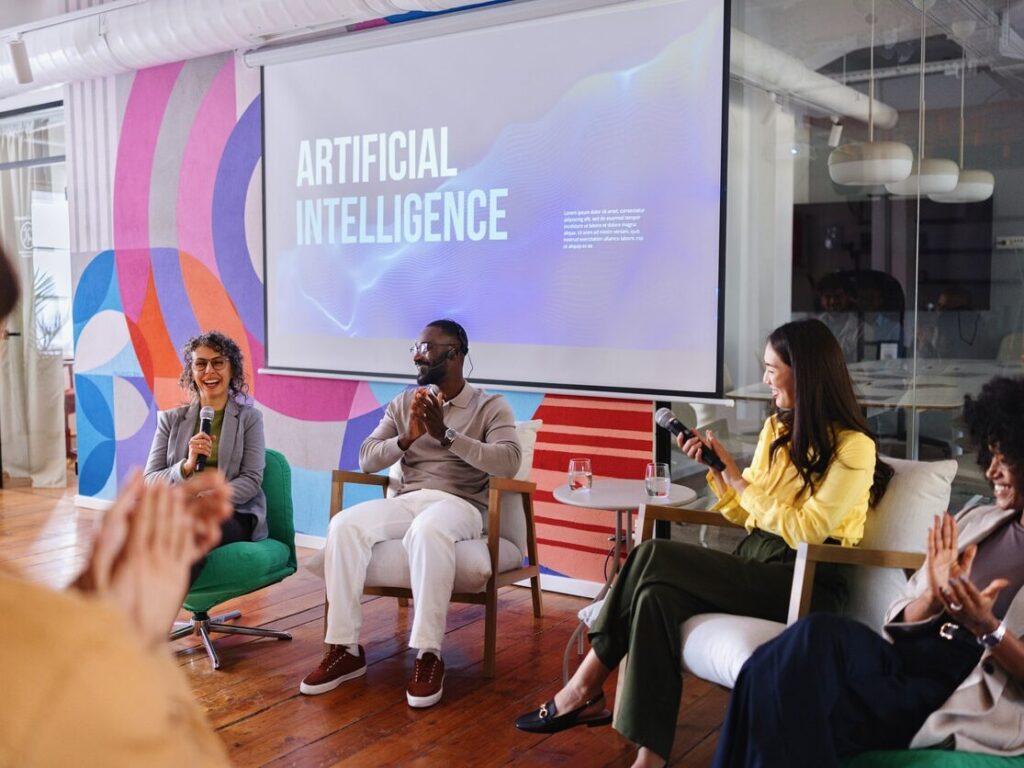
Nearly half of employees worry they will be judged for not using artificial intelligence (AI) enough at work, raising concerns about growing performance expectations, workload pressures and the potential impact of AI adoption on employee wellbeing.
Research from the London School of Economics and Political Science (LSE), in collaboration with global consulting firm Protiviti, found that 48 per cent of employees globally are concerned about being judged for insufficient AI use, compared with just 20 per cent who worry about being judged for using it.
The findings suggest workplace expectations are shifting as AI becomes increasingly embedded in everyday tasks, with employees facing pressure not only to adopt the technology but also to demonstrate that they are keeping pace with colleagues and organisational demands.
The third annual report, Beyond the Technology: Who Really Captures AI’s Gains at Work, surveyed 3,001 professional employees globally between March and May 2026.
It found that 74 per cent now use AI at work, compared with 29 per cent in 2024, highlighting the speed at which the technology is changing working practices.
However, while AI is delivering measurable time savings, researchers warn that greater efficiency could lead to ‘workload creep’, where the capacity created by technology is absorbed by additional tasks, higher output expectations and expanding responsibilities.
Employees using AI reported saving an average of 19 per cent of their working week, but reinvested 72 per cent of that time into other work.
Half of those saving time said they were using the additional capacity to take on new responsibilities or projects, raising questions about whether productivity improvements are translating into better working conditions or simply increasing expectations.
While automation has the potential to reduce repetitive tasks and mental effort, the benefits for employee wellbeing may be limited if efficiency gains are accompanied by increasing workloads, pressure to demonstrate productivity and reduced opportunities for recovery.
Dr Grace Lordan, founding director of The Inclusion Initiative at LSE, said: “AI is becoming an essential part of how we work. But expectations are rising with it. Employees feel pressure to show they are keeping pace with AI while also taking on more.
“Leaders need to be clear about where AI adds value and how the time it frees should be used. Without that direction, greater efficiency may simply raise the baseline for what employees are expected to deliver. Where those time savings go matters as much as the size of the savings.”
The research found that 82 per cent of AI users said the technology helped them complete tasks more quickly, while 70 per cent reported reduced mental effort. Almost two-thirds, 63 per cent, said AI helped automate manual tasks and 62 per cent believed it improved the quality of their work.
Among employees who saved time through AI, 65 per cent reported spending at least moderately more time on higher-value activities.
However, the researchers suggest that organisations need to consider how this additional capacity is managed, rather than assuming that faster task completion automatically delivers better outcomes for employees or businesses.
Matt Duncan, managing director at Protiviti, said: “AI is creating meaningful productivity gains, but the bigger opportunity is how organizations use the capacity it creates. Simply absorbing those gains into existing workloads leaves much of AI’s potential untapped.
“Leaders should think deliberately about where that capacity can create the most value, whether that means tackling higher-value work, improving quality or giving employees greater space to solve problems and innovate. The goal shouldn’t just be doing more work faster, but using AI to change what people are able to accomplish.”
The findings raise questions about whether organisations are providing employees with equal opportunities to develop the skills needed to adapt to changing workplace expectations.
The research suggests that employers should consider AI training as part of wider workforce development and change management strategies, ensuring employees across different age groups and roles can understand where the technology adds value and how to use it appropriately.
Despite the reported productivity improvements, the study found no consistent association between perceived job performance and AI adoption, training, access to employer-provided tools or integration into standardised workflows.
Instead, employees’ perceptions of how their performance was viewed by leaders remained more closely associated with human qualities, including conscientiousness, resilience, problem-solving confidence and willingness to learn.
This challenges the assumption that greater AI use necessarily translates into stronger individual performance and raises questions about how organisations assess productivity as technology becomes more widely adopted.
The findings point to the importance of maintaining realistic performance expectations and ensuring AI adoption does not become an additional source of workplace pressure. They also highlight the need to consider psychosocial risks associated with technological change, including increasing job demands, uncertainty about expectations and the potential for employees to feel under pressure to demonstrate constant efficiency.
Related News
-
 Opinion & Commentary
Leadership, Culture & Development
The Wellbeing Cost of Being ‘Uninvestable’
8 December 2025 5 min readAll Sectors -
 Industry News
Leadership, Culture & Development
World Green Building Week highlights link between sustainable workplaces and employee wellbeing
9 September 2025 2 min readAll Sectors -
 Industry News
Leadership, Culture & Development
‘Culture rot’ creeping through UK offices as employee morale and values erode
14 November 2025 3 min readAll Sectors -
 Industry News
Leadership, Culture & Development
Microsoft updates flexible work model with focus on in-person collaboration
9 September 2025 2 min readTechnology & Telecoms